
Dental Implants in Buffalo, NY
Dedicated Amherst Dentist Providing Affordable Dental Implants in Western New York
Implants are an alternative to bridges that fill in the space left by a missing tooth, instead of merely masking the gap. Through minor surgery, an implant is screwed into the jawbone, which bonds with the implant’s titanium base in order to simulate the root structure of natural teeth.
An implant is perhaps the longest-term solution to missing teeth, as the osseous connection between the base of the implant and the mandible (the lower jaw) or the maxilla (the upper jaw), can be permanent. The bone surrounding the base of the implant can even be strengthened by the implant’s presence, diminishing the effects of conditions such as periodontitis and the bone loss that naturally occurs after dental avulsion.
Dental implants are composed of three parts: a ceramic crown, which is shaped to mirror the surrounding teeth in form and color; a titanium screw, which is designed for implantation into the jaw; and an abutment, which connects the screw to the inside of the crown. Just as the crown is meant to simulate the enamel of a regular tooth, the screw acts as the tooth’s root, firmly attaching the false tooth to the bone.
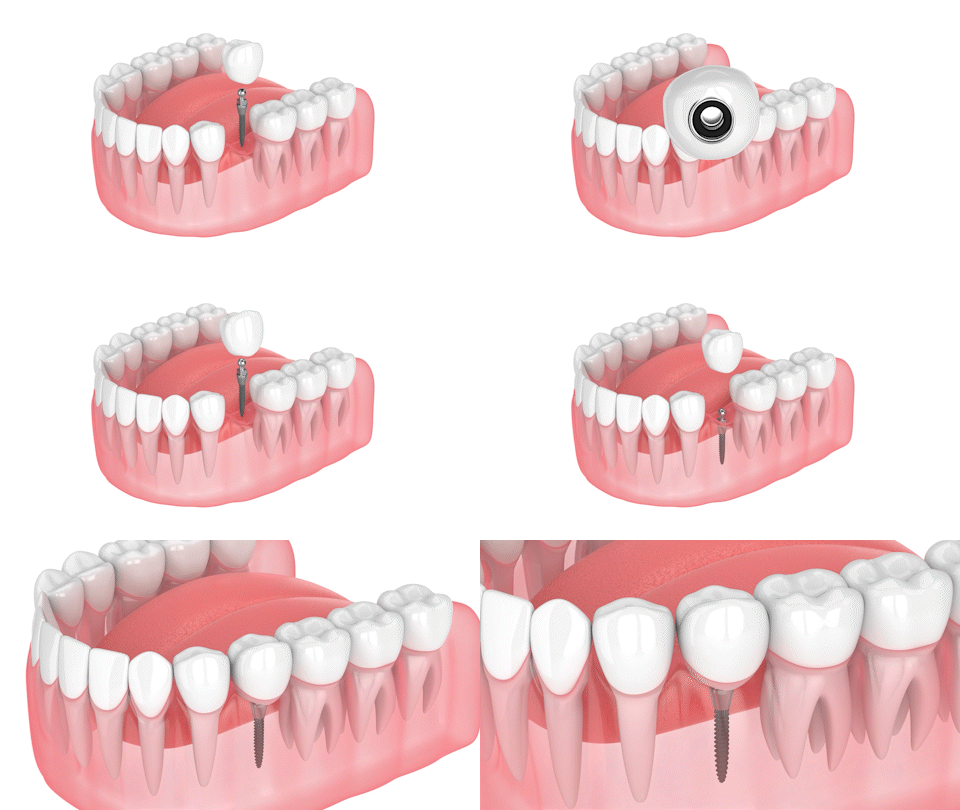
The implantation process is simple, and though it involves surgery, the operation is minor and rather commonplace. Your dentist will first take an impression of your teeth and your jaw, from which a mold will be made.
During the follow-up appointment, after a local anesthetic is administered to the jaw and the gap between the normal teeth, your dentist will drill the screw and the abutment into the space, tightening the screw into the mandible or the maxilla. Once the area has healed, which may take three to six months to occur, your dentist will take another impression in order to determine the ideal shape of the ceramic crown.
At last, the crown will be cemented to the top of the abutment, creating a realistic-looking tooth. By this point, the titanium in the screw will have naturally fused with the jawbone, firmly anchoring the implant in place.
Though the prospect of surgery may seem intimidating to potential dental implant candidates, it is important to remember that the success rate of implantation is above 95%, outpacing many other tooth replacement options in effectiveness. In fact, because dental implants are so sturdy, they allow for further dental work to be accomplished.
Root canals can still be performed under teeth adjacent to the dental implant, and the implant itself can serve as an adequate anchor for any dental bridges that you wish to have installed, potentially sparing your natural teeth from being shaven to support such a device. Dental implants can also serve as the footholds for dentures; as few as four implants, depending on the health and durability of the jawbone, can accommodate an entire row of either fixed or removable dentures.
Dentures have often been placed against the gum line, stretching the comparatively flimsy gums and forcing the jawbone to deossify, or lose bone mass. However, affixing dentures to dental implants instead puts the majority of the stress on the bones of the jaw, preventing any such bone loss.
Our office has installed hundreds of implants, and only one of our patients has ever rejected an implant. For that patient, once we replaced the implant with a similar one of a different material, the rejection ceased. Age should not play a role in determining eligibility for an implant.
If you have questions about dental implants, please contact our Buffalo dental office and schedule an appointment today.