
When a tooth goes missing, the space it leaves behind can affect how your teeth come together and how pressure moves through your bite. You may notice uneven contact when chewing, added strain on nearby teeth, or gradual shifting over time. To restore that missing span, we place a dental bridge. This fixed restoration anchors to the natural teeth on either side, creating a stable connection across the space. An implant bridge serves the same purpose. It replaces missing teeth and restores function across the span, though it relies on a different form of support, dental implants.
A bridge works differently from other restorative options. A dental crown strengthens and covers a single tooth, while a bridge connects multiple teeth to replace the missing tooth between them. Partial dentures also replace missing teeth, though they remain removable. A bridge stays in place, creating a more consistent, stable feel throughout the day.
What Is an Implant Bridge?
Preparing for a traditional dental bridge begins with the teeth on either side of the missing space. We reshape these supporting teeth, known as abutment teeth, so they can securely hold the bridge. This involves removing a portion of enamel from all sides to create a tapered surface that allows the restoration to fit precisely and stay in place. Once prepared, these teeth serve as anchors for the prosthetic structure that spans the gap.
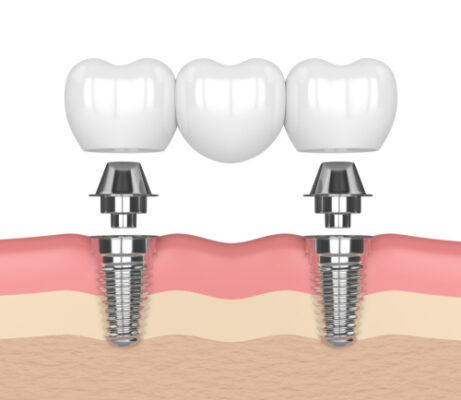
An implant bridge replaces that same span of missing teeth, though it relies on support within the jawbone. We place two or more dental implants into the bone, where they integrate over a healing period of several months. After this integration, the implants function as stable anchors for the bridge, supporting the artificial teeth, called pontics, across the space.
The benefits of an Implant Bridge
The support behind a bridge influences how it withstands daily pressure, how the surrounding teeth are affected, and how the jawbone responds over time. These factors shape how the restoration functions during routine use and how it interacts with the surrounding structures.
Stability That Holds Under Daily Use
An implant bridge changes how support works across the entire restoration. Each implant integrates with the jawbone through osseointegration, creating a stable base that handles biting forces in a way that closely follows natural tooth function. With that support in place, the bridge remains steady throughout daily use, without relying on neighboring teeth to carry the load.
Preserving the Strength of Surrounding Teeth
Traditional bridges depend on adjacent teeth for support, which places added pressure on those teeth every time you chew. Preparing them also requires removing enamel, which reduces their natural protection and can increase sensitivity or the risk of decay and structural wear. An implant bridge keeps that burden off surrounding teeth, so they maintain their original structure and function.
Supporting Jawbone Structure and Facial Structure
Support within the jawbone also influences how the bone responds after tooth loss. Natural tooth roots transfer force to the bone during chewing, helping maintain its density. Implants recreate that process by directing pressure into the jaw, reinforcing the bone where the teeth once were.
When that stimulation is missing, the bone can begin to resorb, leading to changes in jaw shape and how the surrounding tissues are supported.
Explore Implant Bridge Options That Fit Your Bite
An implant bridge restores support at the source, preserves surrounding teeth, and helps maintain the structure of your jaw over time. If you want a solution that stays in place and functions as part of your natural bite, we can evaluate your needs and walk through what treatment would look like for you.
Contact us today to schedule a consultation and take a closer look at your options.