Tooth decay in children is common, even when you are doing your best to build healthy habits at home. According to the Centers for Disease Control, half of children between the ages of 6 and 9 have had cavities at some point.
Some of the sweetest memories we have as children involve our favorite foods. An ice cream cone on a summer afternoon, a favorite candy after a special occasion, or popcorn during a family movie night. We want our kids to enjoy those moments. We also know that the foods and habits surrounding them can contribute to tooth decay. At our Amherst dental office, we see how quickly small habits can affect a child’s oral health. Frequent snacking, sugary drinks, inconsistent brushing, and missed dental visits can all give decay more opportunity to develop. We are here to help you identify those risks and help protect your child’s teeth as they grow.
Tooth Decay in Children: When to Visit Your Dentist
Tooth decay develops gradually. A tooth is exposed to bacteria, acids, saliva, food, and fluoride throughout the day, and those factors are constantly affecting the enamel. Problems begin when repeated acid attacks remove minerals faster than the enamel can replace them. The National Institute of Dental and Craniofacial Research describes decay as a process that can begin before a visible cavity appears.
- Bacteria naturally gather on your child’s teeth, creating a layer called plaque. Brushing and cleaning between the teeth help remove it, but plaque can remain in areas that are harder to reach.
- When your child eats or drinks something with sugar or starch, the bacteria in plaque feed on it and release acids. Foods like bread, cereal, candy, juice, and soda can all start this process.
- The acid starts to weaken the enamel, which is the hard outer layer of the tooth. Saliva and fluoride can help strengthen it again between attacks. But if acid keeps coming into contact with the tooth, the enamel may start to break down. One of the earliest signs can be a chalky white spot.
- As the enamel continues to weaken, a cavity, or small hole, can form in the tooth. At this point, the damage is permanent and usually requires treatment, such as a filling.
- Beneath the enamel is a softer layer called dentin. Once decay reaches this area, it can progress more easily. Your child may begin to notice sensitivity when eating or drinking something cold, hot, or sweet.
- The center of the tooth contains nerves and blood vessels. Advanced decay can reach this tissue, causing inflammation, significant discomfort, or infection.
A cavity is one point in a much longer process. There is a window before the enamel develops permanent damage when the tooth may still have an opportunity to recover lost minerals. Once decay moves through the enamel and into the deeper layers, treatment becomes increasingly important for protecting the remaining tooth structure.
Preventive Pediatric Dental Care in Amherst, NY
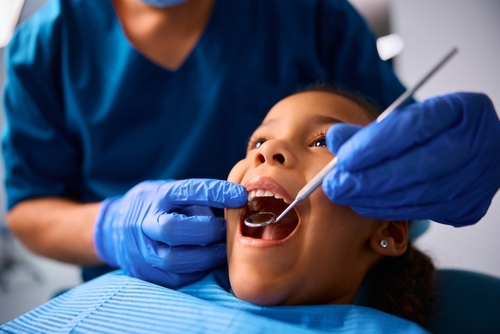
Children’s teeth change quickly. Baby teeth fall out, permanent teeth begin to take their place, and new brushing and eating habits develop along the way. As a family dentist in Amherst, we have the opportunity to follow those changes over time and pay attention to areas where decay may be starting before your child is complaining about a toothache.
During regular dental visits, we look closely at how your child’s teeth are developing and where they may be more vulnerable to cavities. We can also spot early changes in the enamel that you may never see while helping your child brush at home.
Preventive care gives us several ways to protect these areas:
- Fluoride treatments can strengthen enamel
- Dental sealants cover the deep grooves of certain teeth where cavities commonly develop.
- Regular exams, cleanings, and digital X-rays also allow us to monitor changes that may require attention.
At Queen City Family Dentistry, your child can continue seeing the same dental team as their needs change. We care for children, parents, and families throughout Amherst, so a first dental visit can grow into years of familiar, consistent care.
Trust Our Skilled Team With Tooth Decay in Children
Your child’s smile will change a lot between their first baby tooth and their permanent teeth. Having a dental team who sees them through those changes gives us the chance to notice concerns early, care for cavities when they arise, and support healthy teeth along the way.
At Queen City Family Dentistry, we welcome children and families from Amherst and the surrounding communities. If your child is due for a dental visit or you have noticed something concerning, schedule a visit with our team today.