When people think about gum disease symptoms, bleeding and swollen gums probably come to mind first. Those are important signs, but they don’t cover everything someone with gum disease may notice. Persistent bad breath, gum recession, and eventually tooth mobility can all occur, while some people experience few obvious symptoms at all.
A study published in BMC Oral Health found that gum disease affected participants across the spectrum, including those with gingivitis. Participants described changes in eating, oral hygiene, and social interactions, along with concerns about the health and appearance of their gums. The researchers noted that some of these effects have received relatively little attention in previous gum disease research.
Early gum disease may be considered mild, but the changes you notice can still be significant. Bleeding that keeps returning, a receding gumline, or another persistent change may be an early indication that your gums are becoming inflamed or that gum disease has started to develop.
Can You Have Gum Disease Without Symptoms?
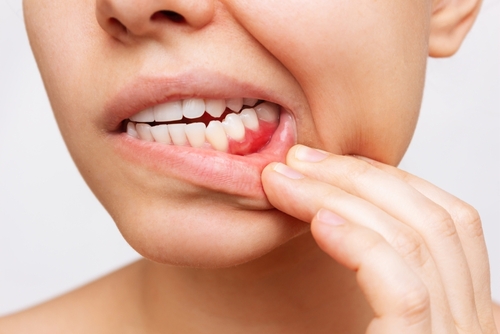
Gum disease isn’t always painful, and its earliest symptoms can be easy to miss. You may notice a little blood when you floss, a change in the color of your gums, or bad breath that keeps returning, while someone else may notice very little at all.
Early gum disease, or gingivitis, develops when plaque accumulates along the gumline and causes inflammation. The gums may become red, swollen, or more likely to bleed, although these symptoms are not always pronounced. Gingivitis has not yet caused the loss of the bone supporting your teeth, and at this stage, the condition can typically be reversed.
If gingivitis progresses to periodontitis, the changes extend to the structures that hold your teeth in place. Spaces between the gums and teeth can deepen into periodontal pockets, giving bacteria more room to collect. As these pockets deepen, they can damage the tissues and bone that support the teeth.
Pain is not a reliable way to judge how far gum disease has progressed. Even relatively minor changes can still be worth paying attention to.
What Are the Less Obvious Gum Disease Symptoms?
Pain isn’t always what alerts you to gum disease, and the first clues may be small changes that are easy to overlook.
Watch for:
- Bleeding during brushing or flossing, even if it only happens occasionally.
- Changes in the color or appearance of your gums, including redness, swelling, tenderness, or a shiny appearance.
- Persistent bad breath or an unpleasant taste that returns after brushing.
- Receding gums, which can make a tooth look longer or expose a sensitive portion of the root.
- Changes between your teeth, such as new spaces or food repeatedly collecting in the same area.
- Changes in tooth stability or your bite, including shifting or loose teeth or teeth that no longer come together as they once did.
How Can a Dentist Tell If You Have Gum Disease?
If you have noticed changes in your gums, a periodontal evaluation can show whether they are related to gingivitis or periodontitis. We examine the gums for inflammation, bleeding, and recession and measure the spaces between your teeth and gums to check for periodontal pockets. We may also use X-rays to look for changes in the bone supporting your teeth.
What comes next depends on what we find. Gingivitis may improve with a professional cleaning and better plaque control at home, while periodontitis often requires scaling and root planing to remove plaque and tartar below the gumline. Once we know how your gums and supporting structures have been affected, we can determine the appropriate level of care.
Have You Noticed a Change in Your Gums?
You do not have to wait for pain or more obvious problems before bringing up a concern about your gums. If you have noticed bleeding, recession, persistent bad breath, or another change that keeps returning, an exam can tell us what is happening and whether treatment is necessary.
At Queen City Family Dentistry, we evaluate gum health as part of long-term care for your teeth. If something has changed, come see us in Amherst, NY, and let us take a closer look. Contact our office today to schedule an appointment.